
AI coding tools have become confusing.
At first, the question was simple: which model writes better code? Then it became: should I use Claude Code, Codex, Cursor, or another agent? Now another name has entered the conversation: ZCode.
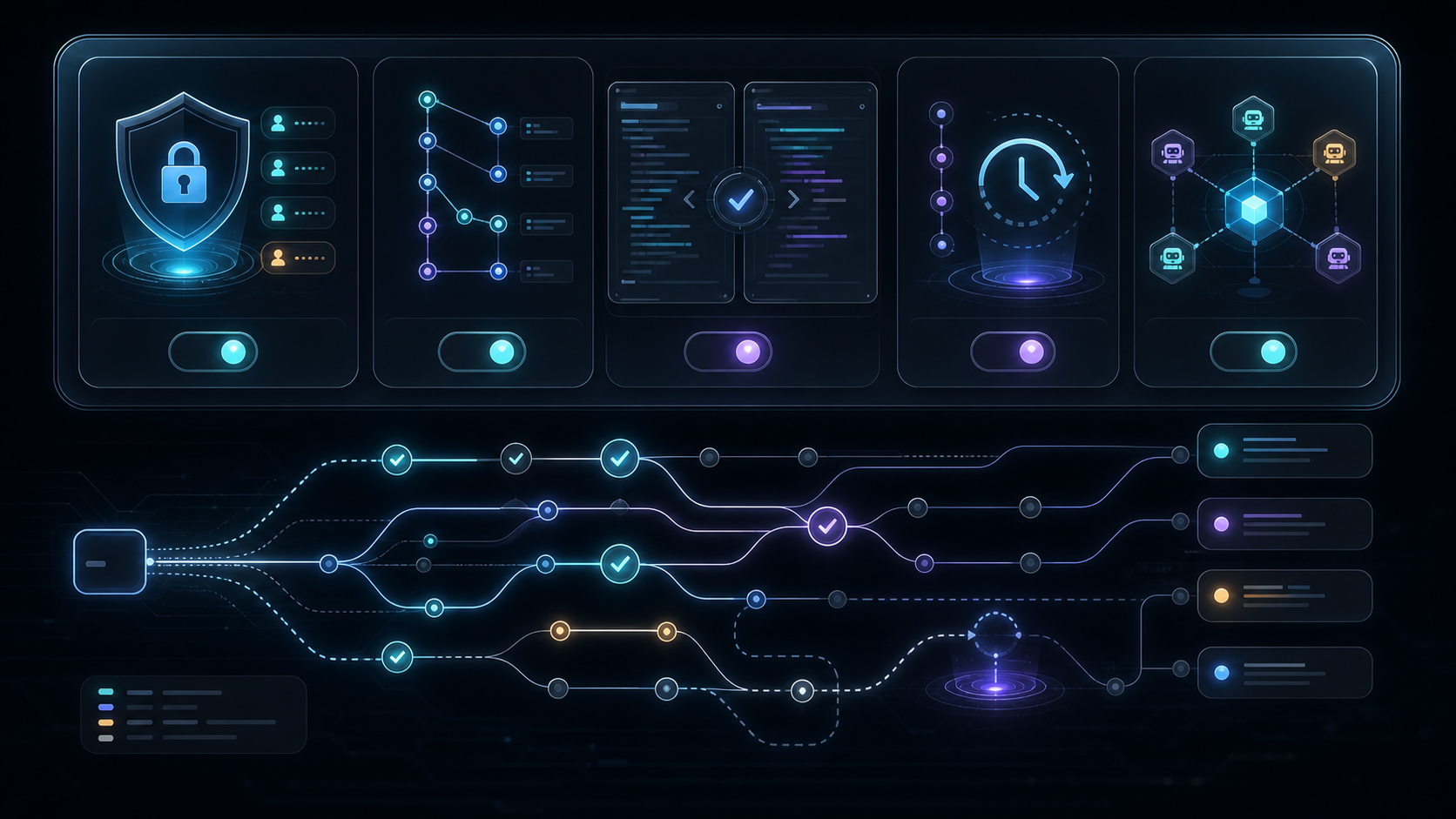
If you only look at the name, it is easy to assume that ZCode is “Zhipu’s Codex” or “China’s Claude Code.” But based on the public documentation, ZCode is better understood not as a standalone model, but as an Agentic Development Environment: a workspace designed to help AI agents handle long-running software development tasks with more stability and control.
ZCode Is Not Just Another Model

ZCode’s official documentation describes it as a full-featured Agentic Development Environment built for Long Horizon Tasks.
That phrasing matters. It means ZCode is not trying to merely autocomplete your next line of code. It is trying to support the entire development loop: understand the requirement, plan the task, modify files, run terminal commands, inspect results, return to the task, and keep iterating.
In other words, ZCode is closer to an AI development workspace. It keeps goals, files, terminal results, browser context, execution modes, and Git state inside the same task, so the agent does not lose continuity halfway through.
The right way to understand ZCode is not “model A versus model B.” It is better to see it as a control layer that helps agents complete longer tasks in a more stable and reviewable way.
How It Differs From Claude Code

Anthropic describes Claude Code as an agentic coding tool that can read your codebase, edit files, run commands, and integrate with your terminal, IDE, desktop app, and browser.
So Claude Code and ZCode do overlap. Both go far beyond autocomplete. Both can touch a real project, change files, run tools, and help complete software tasks.
The difference is product emphasis.
Claude Code’s strength is the model and reasoning experience. It feels like working with a strong engineering partner that can understand a large codebase, break down requirements, explain architecture, and make multi-file changes through natural language.
ZCode puts more emphasis on task management and execution stability. Its documentation highlights tasks, permissions, context, tool calls, and review flow organized around ZCode Agent, with confirmation for sensitive commands and high-permission actions.
So the difference is not simply “which one writes better code.” Claude Code is closer to directly working with a powerful agent. ZCode is closer to giving agents a visual, traceable, remotely-controllable task workspace.
How It Differs From Codex
OpenAI describes Codex as its coding agent for software development. It can write code, understand unfamiliar codebases, review code, debug issues, and automate development tasks such as refactoring, testing, migrations, and setup.
This means Codex, like Claude Code, has moved beyond early code completion. It is also an agent for real development work.
Codex’s strength is the OpenAI ecosystem: ChatGPT, the Codex app, IDE, CLI, GitHub integrations, automation, and SDKs. If your workflow already lives inside OpenAI or ChatGPT, Codex is the low-friction choice.
ZCode differs by positioning itself as an ADE. It aims to bring long tasks, files, terminals, browser context, Git state, permissions, review, and remote control into one workspace.
Put simply: Codex is OpenAI’s coding agent; ZCode is closer to a development environment and control console for agentic work. They may compete, but they are not necessarily mutually exclusive.
How Should Developers Choose?

If your tasks are short, such as writing a function, fixing a bug, or reviewing a pull request, Claude Code or Codex may already be enough. In those cases, model quality, context understanding, tool use, and familiarity matter most.
If your tasks are long, such as restructuring a module, finishing a feature across many files, or running tests until the change passes, you need more than one good answer. You need task continuity, reviewability, safety confirmation, and the ability to take over midway.
That is where tools like ZCode become interesting.
A practical rule:
- If you want the most mature natural-language coding agent experience, start with Claude Code.
- If you already live in OpenAI, ChatGPT, and Codex workflows, start with Codex.
- If you care about long-running tasks, visual task management, permissions, and remote follow-up, evaluate ZCode.
- If you lead a team, do not only ask which model is smartest. Ask which workflow can be reviewed, handed off, and governed.
The next phase of AI coding will not be decided only by who answers smarter. It will be decided by who turns coding agents into controllable systems.
That is why ZCode is worth watching. It is not simply trying to beat Claude or Codex. It is trying to move agentic coding from a smart command line into a manageable development environment.
This article is a technical observation and tool selection analysis. It does not constitute procurement, investment, or partnership advice. AI coding tools change quickly; verify features, pricing, and model support with official sources.
Comments